
Disentangling Global and Local Components in Modeling Renewables in a CGE Framework

© 2026 by the New & Renewable Energy
This is an Open Access article distributed under the terms of the Creative Commons Attribution Non-Commercial License (http://creativecommons.org/licenses/by-nc/4.0) which permits unrestricted non-commercial use, distribution, and reproduction in any medium, provided the original work is properly cited.
Abstract
This study disaggregates the global and local components of solar and wind technologies to reflect global and local learning-by-doing in a CGE framework. Following previous studies and using international databases, this study extends the UNICON-G-CGE model to incorporate productivity improvements from the deployment of solar and wind technologies for globally traded and locally provided components. The global CGE model is established based on the GTAP 11 Power database. Additionally, the SSP 2 scenario is utilized for calibration, and the NGFS emission pathway is used to derive economy-wide carbon prices. In this study, learning is implemented as a productivity gain linked to global or regional cumulative production. This study establishes scenarios with different learning assumptions (no learning, single global learning, and joint local and global learning). The results indicate that single global learning, which is used in many CGE studies, can exaggerate the scale of renewable expansion and economic benefits relative to joint local and global learning. This study underscores the advantage of accelerating local learning and local capacity—through capacity building, reducing administrative costs and processes, and enhancing local experiences—alongside technology development.
Keywords:
Global CGE, Learning rate, Solar PV, Wind, Local learning키워드:
글로벌 연산가능일반균형모형, 학습효과, 태양광, 풍력, 로컬 학습1. Introduction
A number of countries have been making efforts to establish their Nationally Determined Contributions (NDCs), targeting the year 2035 or later. At COP (Conference of the Parties) 28, the Parties reaffirmed that global net-zero greenhouse gas (GHG) emissions by 2050 and at least reaching a 60% reduction of GHG emissions by 2035 are necessary to limit global warming to 1.5 degrees.[1] To achieve such ambitious targets, the Parties agreed on tripling global renewable energy capacity, and this indicates that the global transition to renewable energy is crucial and inevitable. At the same time, it becomes more important to understand the expected economic impacts of such transitions. For economic impact analysis, the computable general equilibrium (CGE) models are widely used, and the modeling approach of technology development is highly relevant and important. From IRENA, 2025,[2] the levelized cost of electricity of solar PV and onshore wind declined by 90% and 70%, respectively, from 2010 to 2024. To do so, the concept of technological learning that the costs of renewable technologies decline as cumulative experience and deployment increase is widely used, and it is commonly referred to as “learning-by-doing.” The concept of learning by doing has been studied for decades. A single-factor learning-by-doing is a classic approach where unit costs decline as cumulative capacity or production increases, and it is often expressed as Cost = a (Cumulative Capacity or Production)-b, where b refers to the learning parameter. This approach includes all drivers of renewable energy cost changes into the experience proxy, which can lead to omitted-variable biases, and the parameter can be sensitive to the estimated data, time period, and model formulation. Despite those limitations, it is easy to apply to models and analyze policy impacts. To overcome such limitations, some studies provide two-factor learning curves, but a limited number of models have adopted this approach. Shi et al., 2023[3] apply the learning-by-doing concept in the recursive dynamic CGE model of China and analyze the carbon tax revenue recycling to the renewable energy generation. It assumes the carbon tax revenue is provided to renewable energy sectors, particularly solar and wind, as a subsidy. The study found that a higher learning rate with subsidies can bring positive GDP growth in China. Luderer et al., 2015[4] explained the modeling approach of the technology development in the REMIND model. The REMIND Model indicates that endogenous technological change through the learning component is applied to renewable and innovative technologies. This model includes global learning curve to reflect the international knowledge spillovers and technological development. Gao et al., 2024[5] include technological advancement in the Chinese CGE model and examine the effects of sustainable energy and technological development, as well as carbon taxes. It indicates that technological progress can reduce the carbon tax levels and positively contribute to the energy transition. Beck et al., 2018[6] assessed the benefits of renewable energy support through learning-by-doing in Ontario, Canada, based on a CGE analysis. To reflect learning externalities, the study considered the learning effects of the balance-of-system costs. Vrontisi et al., 2020[7] and Fragkos and Fragkiadakis, 2022[8] indicated that the GEM-E3 model includes endogenous learning-by-doing for clean technologies, including biomass, ethanol, wind power and solar PV, and electric vehicles. Those learning-by-doing increases Total Factor Productivity of those sectors. However, the conventional approach to modeling learning rates in many models often overly simplifies it by applying a simple, global learning rate derived from worldwide cost reductions. This may fail to capture the complex aspects of energy systems, which include both globally traded components, which may benefit from international knowledge spillovers, and locally sourced components, which can be dependent on local experience. These characteristics have been investigated by some researchers. Huenteler et al., 2016[9] analyzed six different renewable technologies in Thailand and estimated locally and globally sourced goods and services. The study analyzed the effects of local and global learning in Thailand by utilizing a model of Thailand’s electricity sector and identified that local and global learning can support cost reductions. Particularly, the study emphasized the potential of local learning in cost reductions of renewables. Zhang et al., 2020[10] studied multi-level learning effects on technology diffusion and expanded the REMIND model, an integrated assessment model, to reflect endogenous diffusion patterns and regional cost dynamics. The study identified that the combined global and local learning can slow down the pace of the technology deployment. These studies reflect efforts to incorporate diverse technology diffusion patterns into modeling processes. For analyzing the long-term low-carbon transition pathways, it is crucial to reflect the diffusion and deployment of innovative technologies in the modeling framework. Particularly, renewable energy has been developing and deploying rapidly globally, and it is considered a key component of the low-carbon transition. Although there are various studies that have analyzed the technology diffusion with learning rates via different types of models, there are limited studies focused on Korea, as well as analyses based on CGE analysis, which are widely used for analyzing the economic impacts of mitigation policies. From the literature, a number of CGE models consider learning rates to incorporate such technological development. Thus, the study considers disaggregating the local and global components of solar and wind technologies and applies different learning rates to these components. In order to do so, the study categorizes the local and global components of solar and wind power generation based on literature, and it aims to incorporate learning rates within the global CGE model, the UNICON-G-CGE model. Then, it compares the results of a single learning rate, which is commonly applied in many existing studies, with the results of a combined global and local learning rate. Finally, it analyzes how these factors affect the deployment of renewables in Korea and derives policy implications.
2. Methodology
2.1 UNICON-G-CGE Model
To analyze these, the study utilizes the UNICON-G-CGE model, a multi-regional, multi-sectoral dynamic recursive computable general equilibrium (CGE) model (Jung et al., 2021; Kim et al., 2023; Moon et al., 2024).[11~13] The model is developed based on the latest GTAP 11 Power Database, and the model consists of a series of equations and equilibrium conditions, including commodity markets. The production function is structured based on the production nest, and it is established by the nested constant elasticity of substitution (CES) functions.
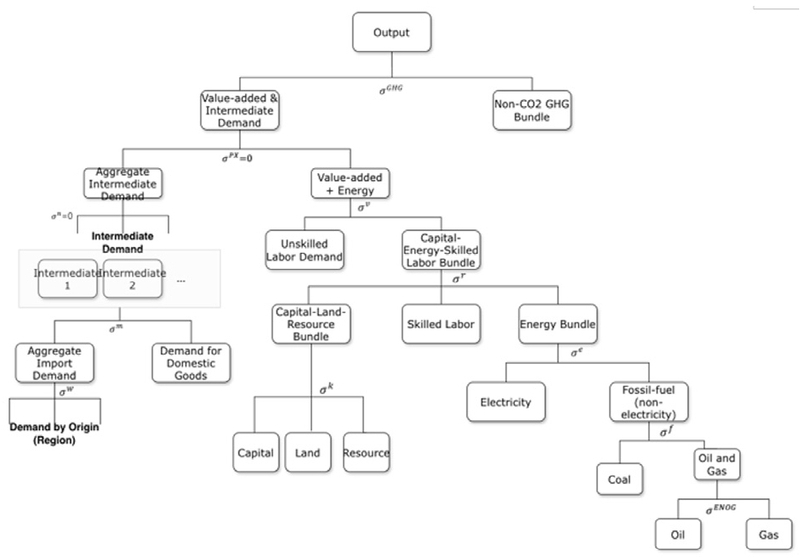
Production nest
The intermediate inputs are structured using the Leontief function with fixed coefficients. International trade is structured using the Armington Specification, showing a nested structure with a top nest determining the composition of domestic and imported goods and a bottom nest considering the imported goods across countries (Jung et al., 2021; Moon et al., 2024).[11,13] Household consumption is modeled based on a Cobb-Douglas function. The model considers not only CO2 emissions from fossil fuel combustion but also non-CO2 emissions (N2O, CH4, SF6, NFCs, PFCs, and HFCs). The carbon price is applied to these CO2 and non-CO2 emissions.
Furthermore, the model incorporates a vintage capital structure, which includes ‘old’ and ‘new’ capital (Moon et al., 2024).[13] This indicates a semi-putty-clay approach, reflecting the rigidity and transition dynamics. It assumes the ratio of the ‘old’ vintage as 30%, and the elasticities of substitutions of ‘old’ vintage are assumed to be 30% of those of ‘new’ vintage (Moon et al., 2024).[13] The study aggregates 160 regions and countries into 16 regions and aggregates 76 sectors into 22 sectors. Using a single-country CGE model makes it difficult to distinguish and analyze global and local learning, so the study utilizes a global CGE model for analysis. The key parameters used in the model are as follows:

Key parameters
2.2 Global and Local Components
To incorporate the learning-by-doing into the CGE model, it is necessary to reflect that the production costs reduce or productivity improves as cumulative production or capacity expands. As the base year of the GTAP 11 Power database is 2017, the study utilizes the IRENA database to extract information on the production of the year 2017 and the cumulative production of global and regional solar and wind power generation (IRENA, 2025).[14] Given the nature of the CGE model, which is based on monetized value, analyzing the impact of capacity expansion is challenging, so the study considers the production volume to reflect the learning-by-doing. Based on this, the ratio between the 2017 production and the cumulative production was calculated according to the regional classifications in the model (IRENA, 2025).[14]
Afterward, the study aims to distinguish and reflect the global and local components of solar and wind power generation based on NREL and IEA reports (Stehly et al., 2024; NREL, 2024; IEA, 2022; Ramasamy et al., 2023).[15~18] In the prior studies, they considered the module and the inverter as global components, while classifying the field works for installation and soft costs as local components. For wind power generation, the turbine is classified as a global component. Balance-of-System (BoS) can be considered as local components, but they include electrical systems, which can be subject to some global influence. From Stahly et al., 2024,[15] the study assumed that the electrical systems within the Balance-of-System (BoS), such as arrays and export cables, could benefit from global learning. There are various types of wind and solar generation, but the study considered the fixed-bottom wind technology and utility-scale solar PV as the representative technologies. For the solar PV system, the study classifies the global and local components based on utility-scale solar PV. Using the information from (Ramasamy et al., 2023),[18] the study classifies the module and the inverter as global components and the others, including BoS and soft costs, as local components. Therefore, it indicates that the wind power technology is composed of 43.1% global and 56.9% local components, while solar PV is composed of about 36% global and 64% local components. From NREL, 2024,[16] it also indicates that the share of the costs of the inverter and the module accounts for 36% of the total capital costs for utility-scale PV.
For Korea, the proportion of global and local components is adjusted to better align with the domestic conditions by using information from the IEA PVPS National Survey Report.[17] The cost breakdown for grid-connected, ground-mounted, centralized PV systems of >10 MW from the report is considered. The average cost excluding VAT is approximately 1,450 KRW/W, with modules and inverters accounting for 350 and 70 KRW/W, respectively, representing about 29% of the total cost. Therefore, the study assumes that the solar PV technology in Korea reflects a weighting of 29% global and 71% local components.
The current model reflects ‘learning-by-doing’ as the productivity gains rather than direct cost reductions. If we consider only global learning without accounting for local components, it can be considered as follows: where GLR represents the global learning rates of each technology (t).
If we consider the local components as well, the productivity equation can be represented as follows: where w represents the share of local or global components, and LR represents the local learning rate of each technology. The study considers the productivity improvement as the output of learning, which can be the inverse of cost.
The share of the local and global components represents the proportion of local and global cost components for solar and wind technologies, as previously explained. If local production increases, learning occurs based on the local cumulative production in that region. Based on the literature, the study assumed the global learning rate to be 17% for solar and 12% for wind. As actual field works and soft costs exhibit relatively low learning, the study assumed about 4% for both technologies. The UNICON-G-CGE model typically applies autonomous energy efficiency improvement for industries and a single learning rate for renewable technologies. This study focuses on distinguishing global and local parts and their learning rates of solar and wind, so the current analysis does not consider autonomous energy efficiency and learning rates for other renewables.
3. Scenario
The study constructs five different scenarios to analyze the impacts of representing local and global components. The baseline scenario (CUR) assumes no explicit learning scenario, which does not consider the learning effects. Next, CUR_GR scenario assumes a single, global learning rate for wind and solar technologies. The third scenario (CUR_Harmonic_mix) reflects both global and local learning components. The other two scenarios consider the cases where the global learning rate (CUR_Harmonic_mix_High_G) or the local learning rate (CUR_Harmonic_mix_High_L) is enhanced. CUR_Harmonic_mix_High_G scenario assumes that the global learning rates of solar and wind become 20% and 15% from 17% and 12%, respectively. CUR_Harmonic_mix_High_L scenario assumes that the local learning rate becomes 5% from 4%.
In the CGE model, substitution between energy sources or power generation technologies is influenced by relative prices, so the setting of the carbon prices can have significant impacts on the results. Those carbon prices, which directly affect the carbon-emitting technologies or industries, can indicate a substantial and dominant effect on renewable energy and industrial production. Furthermore, as it is a global model, the setting of the global scenarios plays a crucial role as well.
Scenario description
The model adopts globally well-known scenarios for calibration and for setting the emission pathways. The model is calibrated using the SSP 2 GDP and Population scenarios from the latest SSP (Shared Socio-economic Pathways) v3.1.[19] by adjusting the labor productivity. For the global emission scenarios, the ‘current policy’ scenario from NGFS (Network for Greening the Financial System) version 5 is considered (Richters et al., 2024).[20]
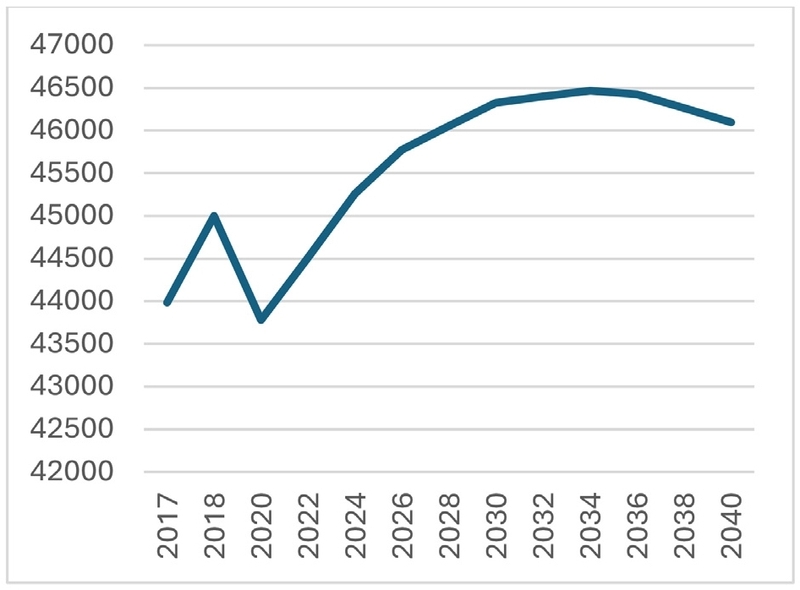
Global emission pathways of NGFS version 5 (unit: MtCO2eq)Source: Author’s elaboration based on (Richters et al., 2024)
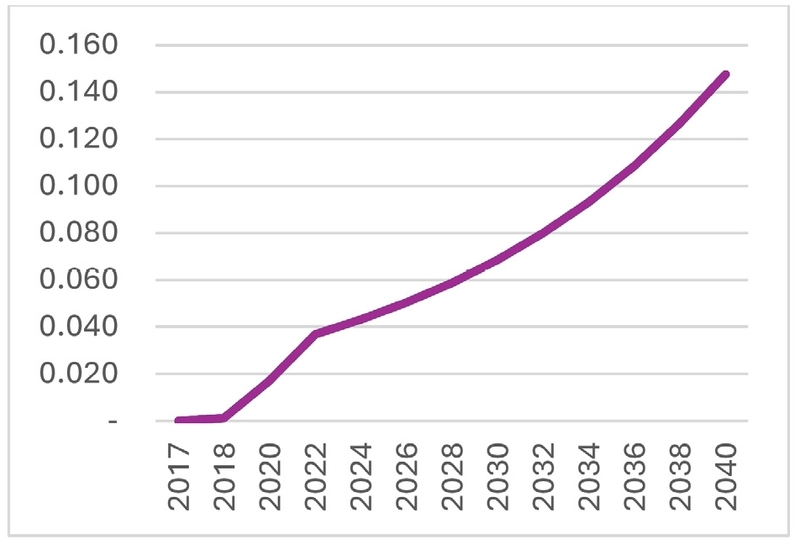
Korea’s carbon price pathway (unit: 1,000 USD/tCO2)
To achieve such an emission pathway, the economy-wide carbon price is applied endogenously. In the case of Korea, the model follows the actual emission pathways until 2022 and identifies the endogenous economy-wide carbon prices. After 2022, the carbon price 2022 is assumed to increase by 8% annually. Accordingly, the carbon price is assumed to be approximately $68 per ton in 2030 and $148 per ton in 2040. The study sets the analysis period from 2017 to 2040, and the current model does not consider innovative technologies, such as hydrogen and CCS. This level of carbon price stays between Korea’s carbon prices of NGFS Phase V’s Nationally Determined Contribution scenario and Net Zero 2050 scenarios from the REMIND model.
4. Results
The study focuses on examining the results for Korea. In the baseline scenario with no learning case, substitution occurs between energy sources or power technologies based on the carbon prices in the model. While there is no explicit learning, the scenario also reflects the increasing carbon prices, so it also shows a significant increase in renewable energy. Considering the price of the permits (KAU 25) remains around 10,000 KRW as of 2nd October 2025,[21] the carbon prices reflected in the model can drive substantial growth of renewable energy. Even without learning, the result shows that solar and wind power generation increases by approximately 21 times as the carbon price rises.
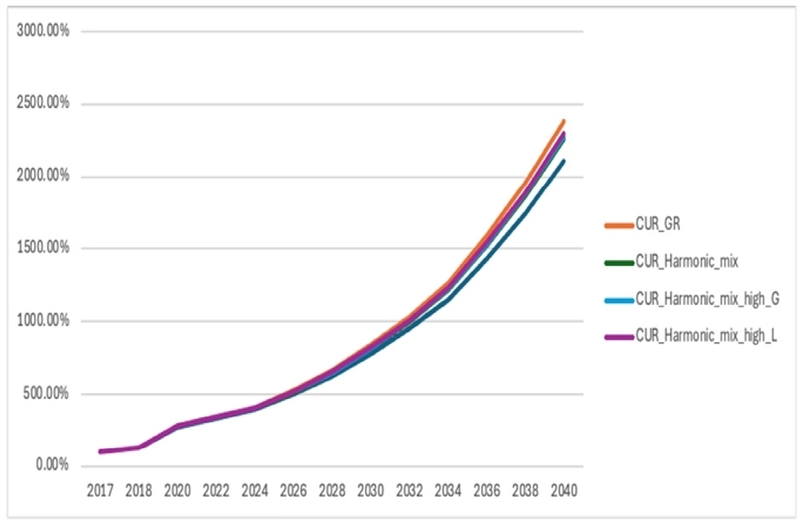
Growth of the Korea’s solar and wind power generation from the 2017-level
In the CUR_GR scenario, when with only the single global learning as other studies, the production increases by approximately 13.1% in 2040, compared to the baseline scenario, averaging a 9.44% increase over the 2018-2040 period compared to the baseline scenario. However, when considering both local and global learning components, the increase relative to the baseline scenario in 2040 remains only about 7.34%. Over the 2018-2040 period, the increase is 5.41%, compared to the baseline scenario, a lower level compared to when only a single learning rate is reflected. This demonstrates that applying a single global learning rate to the renewable energy sector can lead to a potential overestimation of renewable energy production. It also shows that considering the local components, such as soft costs where learning occurs relatively slowly, can partially reduce the projected growth of renewable energy.
In the CUR_Harmonic_mix_High_G scenario, the global learning rates for solar and wind power are assumed to be increased from 17% and 12% to 20% and 15%, respectively. When global learning occurs more strongly, the production did increase slightly, but the increase was modest, reaching only 8.2% increase in 2040 compared to the baseline scenario. On the other hand, in the CUR_Harmonic_mix_High_L scenario, the study assumes a slight increase in the local learning rate from 4% to 5%. This resulted in a relatively high level of production growth of renewable energy. It implies the importance of the efforts to accelerate the local learning, and the result aligns with the Huenteler et al., 2016 [9]. While technology development plays a vital role in expanding the renewable energy deployment, it also suggests that the efforts to reduce soft costs by capacity building, strengthening administrative capacity or reducing administrative costs and processes, and local experience of technology deployment, are also essential.
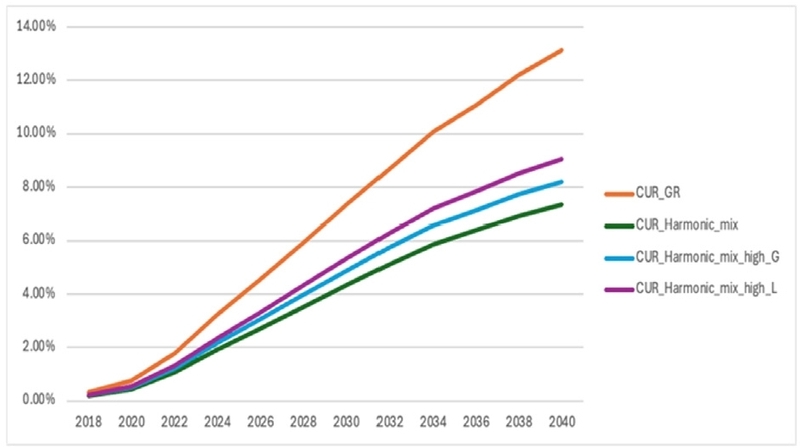
Korea’s solar and wind power generation compared to the baseline scenario (unit: % difference from the baseline)
Examining this separately for solar and wind reveals the following. Both cases show some similar patterns to the earlier results, but exhibit distinct characteristics. For solar PV, the production increases approximately 22.8 times compared to the 2017 level in the baseline scenario. When a single global learning rate is reflected, it shows a 13.12% increase compared to the baseline scenario in 2040. However, when the local and global learning are both considered, the amount of increase significantly decreases to a 6.14% increase in 2040 compared to the baseline scenario. Similar to the results above, accelerating the pace of local learning leads to relatively larger renewable production.
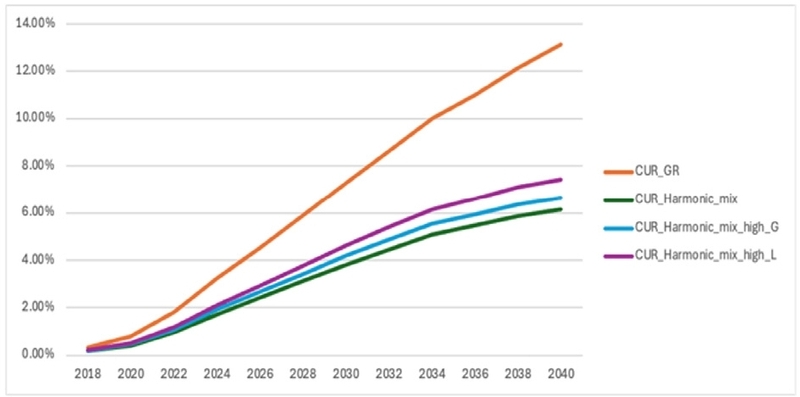
Korea’s solar power generation compared to the baseline scenario (unit: % difference from the baseline)
For wind power, production increases about 16.4 times compared to the 2017 level in the baseline scenario. When a single global learning is applied, production increases by about 13.17% compared to the baseline scenario in 2040. However, when the local components are also considered, production increases by 11.81% compared to the baseline scenario in 2040, which is slightly lower than when only a single global learning is considered. When local learning increases, a higher level of production growth can be expected. This is because Korea’s existing wind power generation still remains at a low level, so as local production increases, rapid doubling occurs, leading to a significant increase in productivity. In reality, wind power still faces significant challenges, and the deployment of wind power remains relatively slow. This suggests that reducing the soft costs and expanding the local experience can yield positive effects.
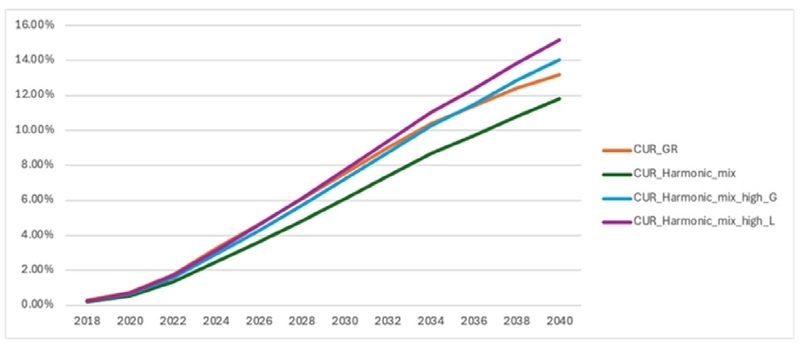
Korea’s wind power generation compared to the baseline scenario (unit: % difference from the baseline)
Examining the economic effects, when only global learning is reflected, real GDP in 2040 increases by about 0.04% relative to the baseline scenario. While the figure itself appears small, it needs to be noted that only the learning parameter can lead to such an increase in the national GDP, with other conditions held constant. When both local and global learning components are considered, this can be reduced to a 0.007% increase compared to the baseline scenario. It provides evidence that considering a single parameter in the CGE model can lead to relatively larger economic impacts, as well as renewable energy deployments.
As shown in the literature, renewable technologies, particularly solar and wind, have been developing rapidly, resulting in high global learning rates. However, the deployment of renewables requires both the technological components and the local knowledge and capacity. This local knowledge and capacity, which can operate as a bottleneck for accelerating the renewable deployments, typically improves more slowly than the renewable technology developments. The result implies that nurturing the local experience and knowledge should be considered important for those relatively early-stage or limitedly used technologies, like wind in Korea.
5. Conclusion and Policy Implications
The study compared the effects of different approaches to incorporating learning when reflecting the impacts of renewable energy technology development in the CGE models, which are widely used for analyzing the economic impacts of mitigation policies. The study updates the UNICON-G-CGE model, which is a multi-regional, multi-sectoral dynamic recursive CGE model, and distinguishes the local and global components of wind and solar power generation based on the literature and international database and reports, including IRENA, NREL, and IEA. The study identified that the consideration of the local components, representing areas like field work and soft costs, can lead to a slightly lower level of renewable deployment and economic benefits compared to the case of applying a single learning rate in the CGE modeling framework. At the same time, the study emphasizes the importance of efforts to accelerate local learning. It indicates the necessity of strengthening domestic capabilities not only through technological development but also through capacity building and know-how. While it often focuses more on technology development and cost reductions of renewable energy, the results of the study imply that strengthening the domestic capacity is crucial for rapid renewable energy expansion. In reality, for domestic wind power, the deployment is delayed due to administrative issues, and challenges like resolving social conflicts and a lack of experience are limiting the steep renewable energy expansion. While the cost reductions from technology development play a key role in renewable energy deployment, the result suggests that resolving these constraints and lowering barriers are essential for domestic renewable energy growth.
However, the results of the study have limitations. It is crucial to consider that it is not a bottom-up power sector model reflecting technical characteristics and constraints, and that the CGE model only considers the technical constraints to a limited extent. While vintage capital structure was considered using the semi-putty-clay approach, incorporating some rigidity, the limitation of not reflecting power market characteristics needs to be acknowledged. However, given the widely used CGE models in analyzing the economic impacts of mitigation policies and low-carbon transitions, the study provides some implications for the importance of how learning components are incorporated in the modeling framework. To conduct a detailed analysis of the impacts of renewable energy expansion within these CGE models, the study also identifies the necessity of integrated models that integrate the CGE and power sector models, which can be expanded in further study. Furthermore, the model specification and assumptions are simplified in this study, as this analysis does not focus on the economic impacts of the mitigation targets. For analyzing the impacts of achieving mid- to long-term mitigation targets, such as the 2035 NDC or the Net Zero transition, on the economy and power sector, the model needs to establish concrete global emission scenarios and model assumptions, and to consider the key technologies, such as hydrogen and carbon capture. In further study, with consideration of the findings of this study, the updated model and scenario can be utilized to analyze the economic impacts of achieving mitigation targets or certain temperature scenarios.
Nomenclature
| CGE : | computable general equilibrium model |
| CES : | constant elasticity of substitution |
Acknowledgments
This work was supported by Korea Environment Industry & Technology Institute (KEITI) through “Climate Change R&D Project for New Climate Regime.”, funded by Korea Ministry of Environment (MOE) (RS-2022-KE002489).
References
- UNFCCC, 2023, “Outcome of the first global stocktake. Draft decision -/CMA.5”, https://unfccc.int/sites/default/files/resource/cma2023_L17_adv.pdf, .
- IRENA, 2025, “Renewable Power Generation Costs in 2024”, International Renewable Energy Agency, Abu Dhabi, https://www.irena.org/Publications/2025/Jun/Renewable-Power-Generation-Costs-in-2024, .
-
Shi, B., Yuan, Y., Shi, M., and Managi, S., 2023, “Can learning-by-doing offset negative impacts of carbon pricing in China?”, Renew. Sustain. Energy Rev., 183, 113441.
[https://doi.org/10.1016/j.rser.2023.113441]

-
Luderer, G., Leimbach, M., Bauer, N., Kriegler, E., Baumstark, L., Bertram, C., Giannousakis, A., Hilaire, J., Klein, D., Levesque, A., et al., 2015, “Description of the REMIND model (version 1.6)”, Potsdam Institute for Climate Impact Research, https://www.pik-potsdam.de/en/institute/labs/energy-transition/remind16_description_2015_11_30_final, .
[https://doi.org/10.2139/ssrn.2697070]
-
Gao, Z., Zhao, Y., Li, L., and Hao, Y., 2024, “Economic effects of sustainable energy technology progress under carbon reduction targets: An analysis based on a dynamic multi-regional CGE model”, Appl. Energy, 363, 123071.
[https://doi.org/10.1016/j.apenergy.2024.123071]
-
Beck, M., Rivers, N., and Wigle, R., 2018, “How do learning externalities influence the evaluation of Ontario’s renewables support policies?”, Energy Policy, 117, 86-99.
[https://doi.org/10.1016/j.enpol.2018.02.012]
-
Vrontisi, Z., Fragkiadakis, K., Kannavou, M., and Capros, P., 2020, “Energy system transition and macroeconomic impacts of a European decarbonization action towards a below 2°C climate stabilization”, Clim. Change, 162, 1857-1875.
[https://doi.org/10.1007/s10584-019-02440-7]
-
Fragkos, P., and Fragkiadakis, K., 2022, “Analyzing the macro-economic and employment implications of ambitious mitigation pathways and carbon pricing”, Front. Clim., 4, 785136.
[https://doi.org/10.3389/fclim.2022.785136]
-
Huenteler, J., Niebuhr, C., and Schmidt, T.S., 2016, “The effect of local and global learning on the cost of renewable energy in developing countries”, J. Clean. Prod., 128, 6-21.
[https://doi.org/10.1016/j.jclepro.2014.06.056]
-
Zhang, S., Bauer, N., Yin, G., and Xie, X., 2020, “Technology learning and diffusion at the global and local scales: A modeling exercise in the REMIND model”, Technol. Forecast. Soc. Change, 151, 119765.
[https://doi.org/10.1016/j.techfore.2019.119765]
-
Jung, T.Y., Kim, Y.G., and Moon, J., 2021, “The impact of demographic changes on CO2 emission profiles: Cases of East Asian Countries”, Sustainability, 13(2), 677.
[https://doi.org/10.3390/su13020677]
-
Kim, Y.G., Moon, J., and Kim, J., 2023, “Evaluating the economic impacts of Korea’s NDC (Nationally Determined Contributions) implementation via carbon pricing: A global multiregional computable general equilibrium analysis”, J. Clim. Chang. Res., 14(3), 253-275.
[https://doi.org/10.15531/KSCCR.2023.14.3.253]
- Moon, J., Kim, Y.G., and Kim, J., 2024, “Assessing the economic implications of global mitigation efforts and international market mechanism based on a global computable general equilibrium analysis”, Environmental and Resource Economics Review, 33(4), 439-470.
- IRENA, 2025, “IRENASTAT Online Data Query Tool: Electricity Statistics by Country/area, Technology, Data Type, Grid connection and Year”, https://pxweb.irena.org/pxweb/en/IRENASTAT/IRENASTAT__Power%20Capacity%20and%20Generation/, .
-
Stehly, T., Duffy, P., and Mulas Hernando, D., 2024, “Cost of wind energy review: 2024 edition”, National Renewable Energy Laboratory (NREL), Golden, Colorado, https://docs.nrel.gov/docs/fy25osti/91775.pdf, .
[https://doi.org/10.2172/2278805]
- NREL, 2024, “Annual Technology Baseline (ATB) – Utility-Scale PV”, https://atb.nrel.gov/electricity/2024/utility-scale_pv#capital_expenditures_(capex), .
- IEA, 2022, “IEA-Photovoltaic Power Systems Programme (PVPS): National survey report of PV power applications in Korea 2022”, International Energy Agency (IEA), https://iea-pvps.org/wp-content/uploads/2024/01/IEA-PVPS-National-Survey-Report-KOREA-2022.pdf, .
-
Ramasamy, V., Zuboy, J., Woodhouse, M., O’Shaughnessy, E., Feldman, D., Desai, J., Walker, A., Margolis, R., and Basore, P., 2023, “U.S. solar photovoltaic system and energy storage cost benchmarks, with minimum sustainable price analysis: Q1 2023”, National Renewable Energy Laboratory (NREL), Golden, Colorado, https://docs.nrel.gov/docs/fy23osti/87303.pdf, .
[https://doi.org/10.2172/2005540]
- IIASA, 2024, “SSP Scenario Database (Version 3.1)”, https://data.ece.iiasa.ac.at/ssp/#, .
-
Richters, O., Kriegler, E., Bertram, C., Cui, R., Edmonds, J., Fawcett, A., Fuhrman, J., George, M., Hackstock, P., Hurst, I., et al., 2024, “NGFS Climate Scenario Data Set (5.0)”.
[https://doi.org/10.5281/zenodo.13989530]
- Korea Exchange (KRX), 2025, “KRX ETS information platform”, https://ets.krx.co.kr/contents/ETS/03/03010000/ETS03010000.jsp, .